
The Roman Mirror: Lessons on Stability and Backsliding
We romanticize the Roman Republic as a bastion of civic virtue, but the reality was centuries of civil strife. Understanding this history can inform a more grounded perspective on democracy today.

I participated in a panel with The Democracy Group Podcast Fellowship recently. The topic was:
What are the most urgent threats to democracy right now?
One of the student fellows described how, in our divided times, we can throw around terms like fascism and democracy without necessarily a shared understanding of what we mean by those terms. They suggested looking at history, such as that of the Greeks and the Romans for some context:
"I think sometimes we can lose the sense of what the true meaning of democracy is. People are saying our current administration is fascist. Regardless of what you believe about the current administration, I think it’s better if we just have a better understanding of the 'rules.' I thought it would be cool if, in one of my episodes, we could analyze the Greeks or the Romans and look at how it all started. Not to change people's opinions, but to help them be more informed by going back to the history of it all."
This made me think about the Romans in particular. I did do an episode with Timothy Redmond framed around the story of Orestes from Greek mythology about vengeance, justice, and the birth of democratic process. But today, I’m going to talk briefly about the Romans.
The Myth of the “Ideal” Republic
We often have this idea that the Roman Republic is some kind of ideal. But that period was filled with strife in the form of factions, ambitious generals, and civil wars.
The idea of the Concordia (harmony) of the Republic was mostly a nostalgic Roman propaganda tool. In reality, the Republic was defined by the Struggle of the Orders, a centuries-long political conflict between the plebeians (commoners) and patricians (aristocrats).
By the 2nd century BCE, the Republic wasn’t just “contentious”—it was broken. The political landscape split into two loose “parties” that operated more like organized gangs than modern political parties:
Optimates (”The Best Men”): The conservative senatorial faction that wanted to maintain the status quo and the power of the aristocracy.
Populares (”Favoring the People”): Politicians who bypassed the Senate to appeal directly to the plebeian assemblies, often using the promise of land reform to gain power.
The "idealization" of the Roman Republic is often a byproduct of later Renaissance and Enlightenment thinkers (including the American Founding Fathers) who were looking for a secular alternative to monarchy. They polished the marble, so to speak, while ignoring the bloodstains.
Perhaps the Roman Republic was destined to fail. Historians often argue it was a victim of its own success; a "City-State" model of government simply couldn't scale to govern a multi-continental empire. This raises a haunting question for us in 2026: can a 250-year-old system designed for a different era naturally scale to the complexities of the modern world, or is institutional fatigue inevitable?
The Autocratic Trap: Stability at a Price
There was no declaration of the end of the republic, something that may be important for our times.
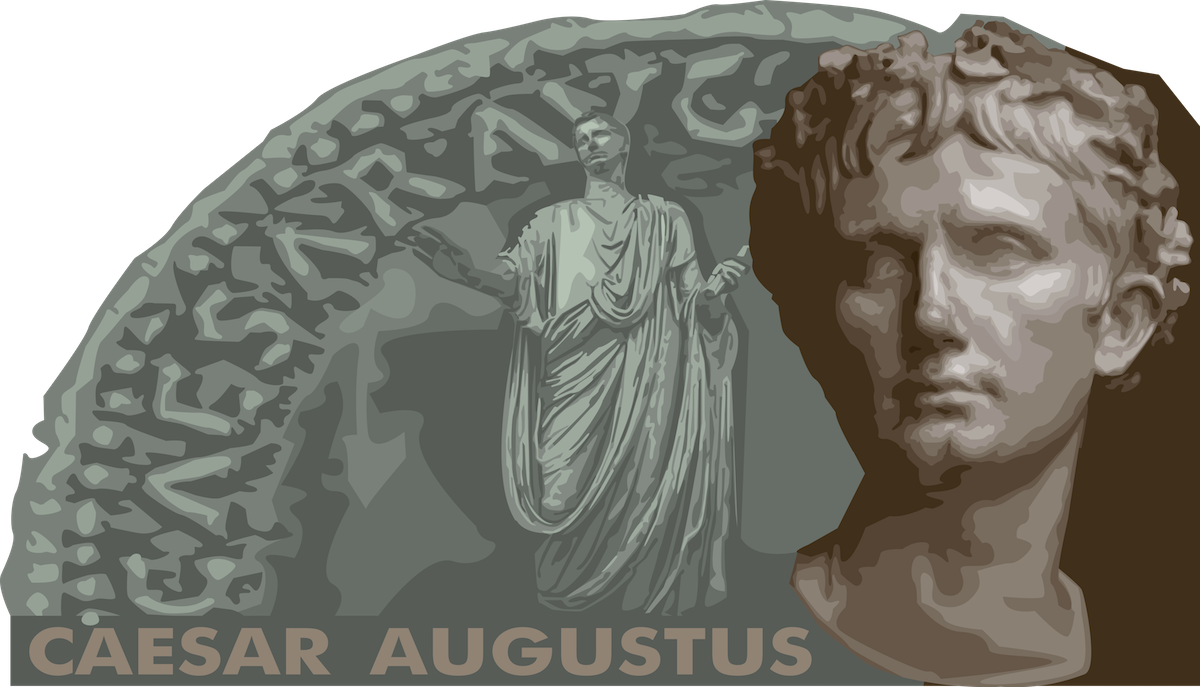
Historians mark 27 BC, when Octavian was granted the title “Augustus” by the Senate, as the “formal end” of the republic. And while that did effectively turn the Republic into an autocracy, it was never explicitly stated and the republic lived on in name. It was only later that historians chose that date as the transition to empire.
Octavian was incredibly careful not to call himself Rex (King) or Dictator. Romans had a deep, cultural hatred for kings. Instead, he took the title Princeps, which simply means "First Citizen." He kept the Senate, the Consuls, and the elections running. But he effectively neutered these institutions by consolidating the legal right to veto any legislation and the sole command of the Roman military into his own hands, ensuring that while the Senate could still debate, it could no longer decide anything against his will.
This 200-year period of relative stability was indeed more peaceful than the chaotic Republic that preceded it. But that peace was entirely dependent on the quality of the man at the top.
This was the “Five Good Emperors” era that peaked with Marcus Aurelius. Upon his death in 180 CE, the system collapsed under his son, Commodus (he is the one in the movie, Gladiator). Rome descended from “a kingdom of gold to one of rust and iron.” The lesson is clear: autocracy may offer a temporary reprieve from partisan gridlock, but it tethers the fate of a nation to the character of a single individual—a gamble that rarely pays off in the long run.
“Democratic Backsliding” and the Sword
The transition from Republic to autocracy was never explicit. It was a “slow-motion collapse” where the Republic lived on in name only. This is what experts today refer to as “Democratic Backsliding.” It suggests that a democracy rarely dies because of a formal declaration. It dies when norms are broken, emergency powers become permanent, and language is subverted. But eventually, the hollowing out of institutions leads to a moment where the “rules” no longer matter at all.
There was one opportunity to restore the republic following the assassination of Caligula in 41 CE. For a brief, frantic window of about 48 hours, it looked like the Republic might actually be restored. That’s when the Praetorian Guard entered the chat. They were the elite unit of the Roman army, established by Augustus to serve as personal bodyguards to the emperor, intelligence agents, and palace security. Some people see modern parallels in U.S. Immigration and Customs Enforcement (ICE).
By 41 CE, the “people” and the “Senate” didn’t choose the leader; the army did. The transition from Republic to Empire was cemented not by law, but by the reality of who held the swords.
By the time of Augustus, many Romans were willing to trade their political liberty for the Pax Romana—because the alternative was no longer a functioning Republic, but endless, chaotic bloodletting. Some see parallels with various factions in the U.S. today that seem ready to abandon Madisonian democracy for a “strong leader”.
As we look at the state of our own institutions today, the Roman story reminds us that once the “rules” are traded for “order,” it is incredibly difficult to get the Republic back.