

There’s a small, specific kind of comedy that only the internet can produce: a video clip referring to Occupy Wall Street protests from fifteen years ago, suddenly getting swarmed by commenters accusing it of being soft on “the left,” gloating about FAFO, and insisting that ICE is “justified.” The video has nothing to do with ICE. It has nothing to do with 2026. It’s about kettling tactics used against Occupy protesters in 2011, under a Democratic president, over a decade before anyone in these comment threads had a reason to care about immigration enforcement.
And yet there they are — dozens of comments, oddly similar in phrasing, oddly uniform in their talking points, arguing furiously with a piece of history that predates the fight they think they’re having.
This isn’t really a mystery once you look at the news cycle underneath it. January and February of 2026 saw a brutal stretch of unrest around federal immigration operations in Minneapolis — Operation Metro Surge — including the fatal shooting of Renée Good by an ICE agent on January 7, and the killing of Alex Pretti, an ICU nurse, by federal agents seventeen days later. Pretti’s death was ruled a homicide by the county medical examiner. Both cases triggered mass protests, national coverage, and an unusually fierce online argument over whether federal agents were acting appropriately or recklessly.
Roughly a third of the [posts about ICE] showed the behavioral fingerprints of bots.
That argument, it turns out, is being fought largely by machines. According to PeakMetrics, a nonpartisan data-intelligence firm that analyzed 2.57 million posts about ICE and Minneapolis across X, Reddit, and Instagram, roughly a third of the English-language conversation — about 34.5% — showed the behavioral fingerprints of bots or coordinated inauthentic accounts: repetitive content, suspicious posting cadence, freshly minted accounts acting in lockstep. Spanish-language posts were even more saturated, at 36.6%. Axios, which first reported the numbers, noted this is roughly typical for a fast-moving, high-attention news event — not some unprecedented anomaly, just a normal feature of how these fights get fought now.
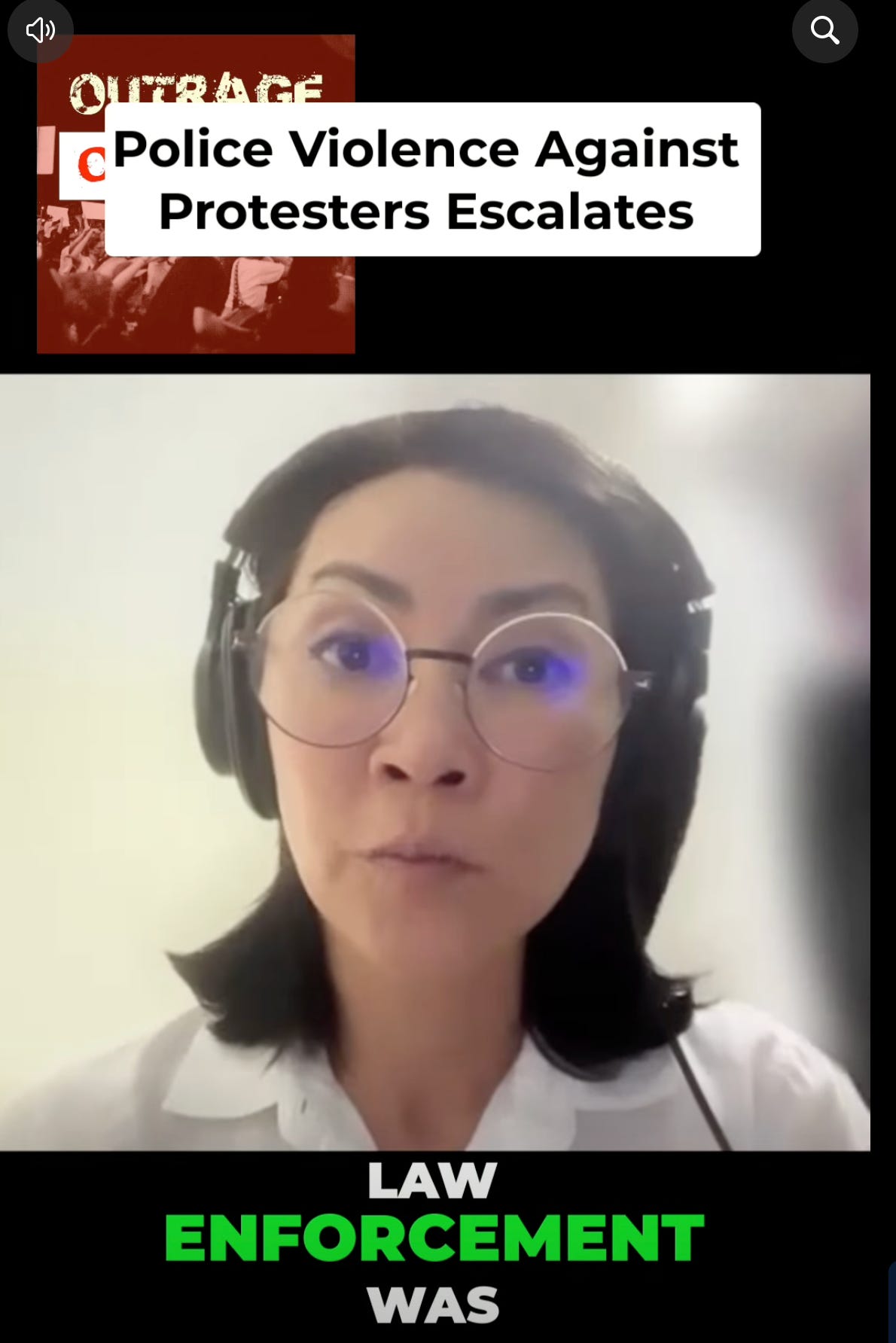
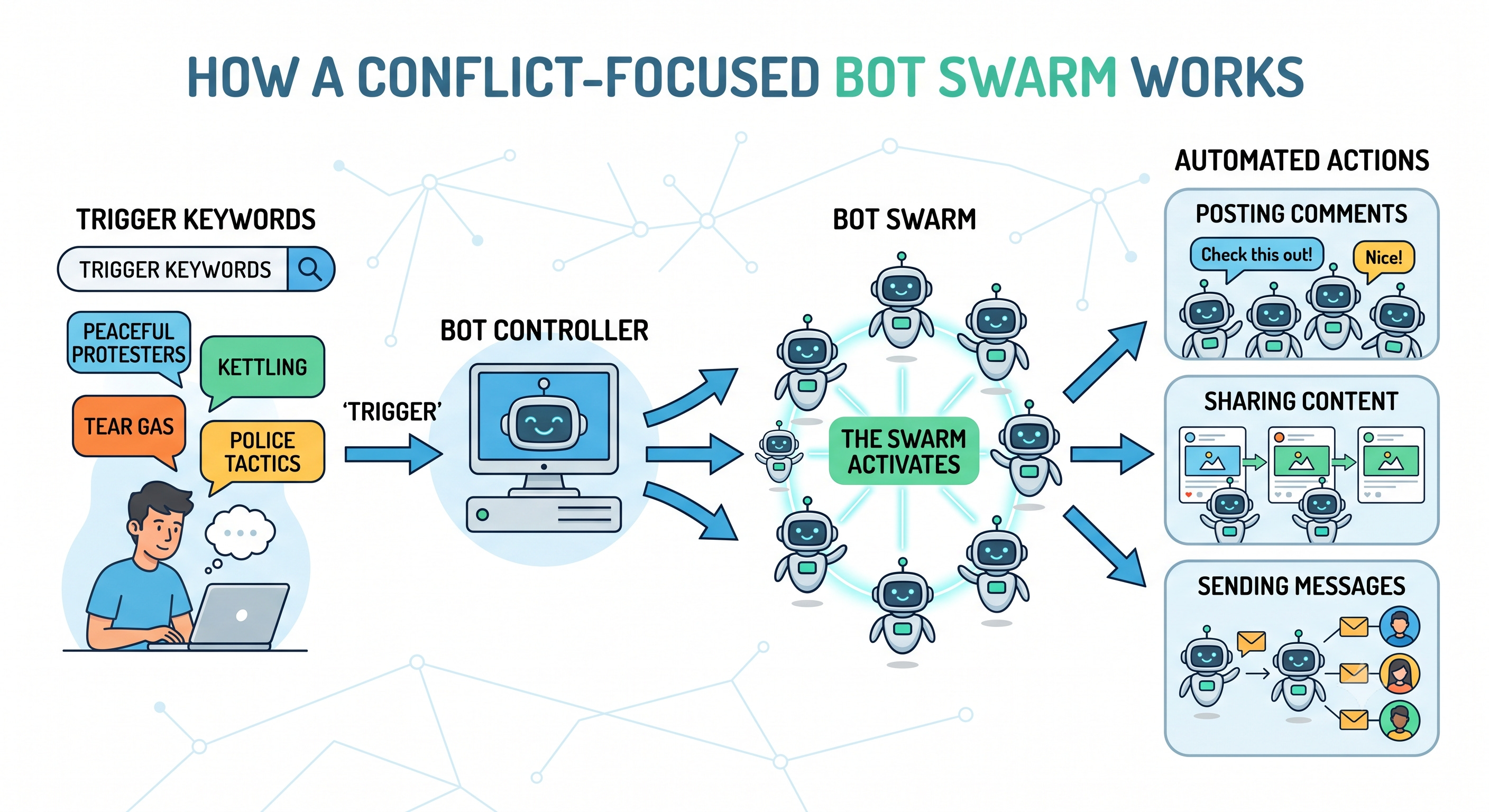
Which brings us back to the Occupy clip. If you’re running (or renting) a network built to flood ICE-related content with a defensive narrative, you’re not doing it by hand. You’re doing it with keyword triggers: “protest,” “police,” “law enforcement,” “violence,” “kettling.” The network doesn’t read the post. It doesn’t check the year, the president in office, or the actual subject. It scans for the trigger words, fires off a pre-loaded script defending federal agents and accusing protesters of instigating violence, and moves on. Somewhere in the pipeline, a clip about Occupy protests more than a decade ago tripped the same wire as a post about recent actions in Minneapolis, and the swarm did what swarms do.
That’s why the comments read like they were written by someone who’d never seen the video — because in the most literal sense, nothing ever did. The result is almost accidentally revealing. Strip away the context and the automation, and you can see the machinery underneath: a narrative built to be deployed anywhere the right words appear, regardless of whether the facts underneath it have anything to do with the argument being had.
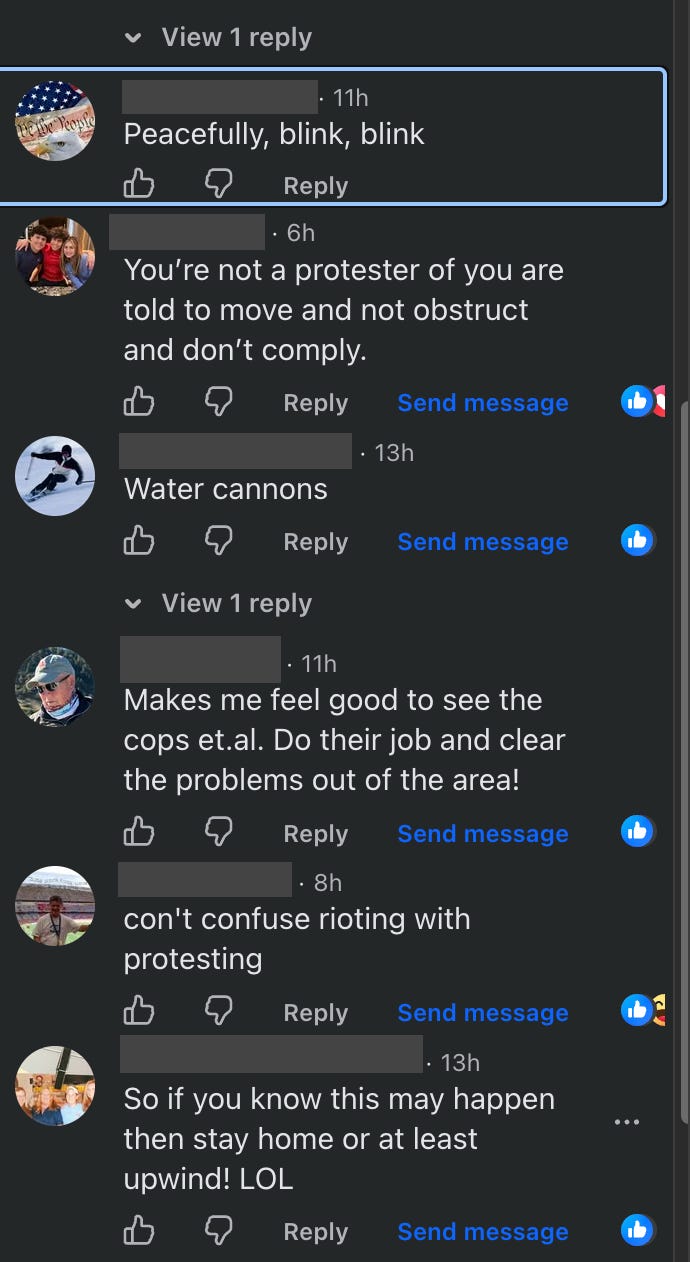
None of this means every skeptical or pro-ICE comment on the internet is a bot — plenty of people hold that view sincerely, and plenty of the anger on both sides of the Minneapolis story is completely organic. But when a wave of nearly identical comments shows up on a clip that is, factually, about the wrong decade and the wrong president, it stops looking like organic disagreement and starts looking like exactly what the data says it probably is: a keyword-triggered campaign that occasionally, almost comically, hits the wrong target.
There’s something almost instructive about that misfire. Coordinated influence campaigns are usually invisible by design — blended into real conversation, hard to isolate from genuine sentiment. It’s only when the targeting breaks, when the script gets pasted onto the wrong decade, that the seams show. For a moment, you get to see the strings.
So Who’s Behind This?
Unfortunately, this is genuinely a “nobody actually knows” situation. The plausible suspects include: domestic partisan/activist operations, foreign influence operations, or maybe a mix of both. There are also opportunistic commercial actors, such as engagement farms that aren’t ideological at all, but just harvest outrage for ad revenue or follower-count monetization, but that doesn’t seem to be the case here.
Sources: Axios (Jan. 29, 2026) on PeakMetrics’ bot-activity analysis; Wikipedia entries on the 2026 U.S. immigration enforcement protests and the killing of Alex Pretti; ABC News and CNN coverage of the Minneapolis ICE shootings.